Thursday, 15/10/2026 | 06:39 GMT+7

The Department of Energy's Oak Ridge National Laboratory and Whirlpool Corporation are collaborating to design a refrigerator that could cut energy use by up to 40 percent compared with current models.
The Department of Energy's Oak Ridge National Laboratory and Whirlpool Corporation are collaborating to design a refrigerator that could cut energy use by up to 40 percent compared with current models.
The goal of the cooperative research and development agreement, or CRADA, is to make a next-generation household refrigerator more energy efficient by using WISEMOTION, an innovative linear compressor manufactured by Embraco, and other novel technologies and materials.
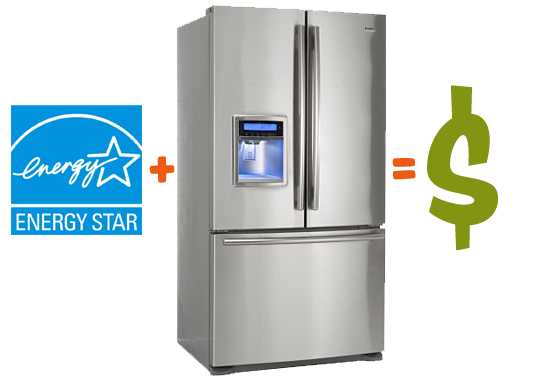
In the 1970s, the average refrigerator used approximately four to five kilowatt hours (kWh) per day; today's models average about 1.5 kWh/day. The result is massive utility savings for consumers, and ORNL and Whirlpool will further that innovation with the goal of building a refrigerator that consumes less than one kWh per day.
"If every refrigerator in the U.S. were replaced with the advanced refrigerator design, the projected primary energy savings would be 0.56 quads per year - the equivalent of 100 million barrels of oil," said Ed Vineyard, director of ORNL's Building Technologies Research & Integration Center.
The team will redesign a refrigerator to incorporate a linear compressor, which reduces energy losses by continuously matching the compressor pumping rate to the refrigerator's cooling requirements. Associated components will provide additional efficiency gains.
By Huong Truong











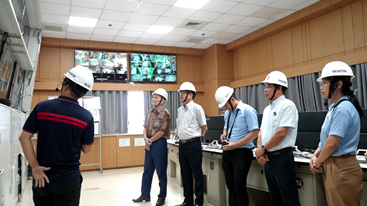 Polytex Pioneers Energy Efficiency in the Textile and Dyeing Industry
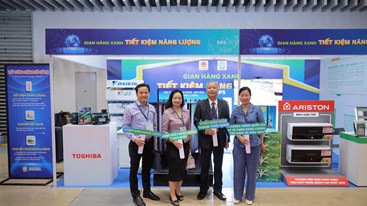 Vietnam ETE & Greenergy Expo 2026: Promoting Green Transition and Energy Efficiency
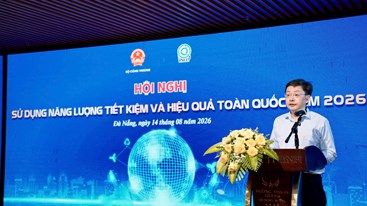 Conference on Energy Efficiency and Conservation in 2026
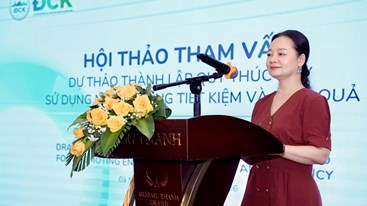 Consultation on the Draft of the Vietnam Energy Efficiency Fund Establishment
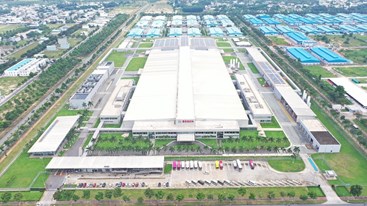 Bosch Vietnam Optimizes Energy to Advance Sustainable Manufacturing
 Contract Award Notice - Support the development of energy management systems and capacity building (Package C2.2.11)
 Contract Award Notice - Review and update for current Energy Efficiency Benchmarking for 2 Sub-Industrial sectors