-

In earlier September, in Dong Thap, representatives of the Center for Industrial Promotion & Consultancy Development reported and discussed the results of energy audit for businesses in the province. This is the program following the national energy policy which has been supported by the Ministry of Industry and Trade in some Southern provinces and cities (called ANEP 2).
-

The Vinh Phuc Province Department of Science and Technology recently worked with the Promoting Energy Conservation in Small and Medium Scale Enterprise Project (PECSME) under the Ministry of Science and Technology to organize a training course on energy conservation in small and mediums-sized enterprises in the areas of textile-garment, food processing, paper and pulp.
-

Nhiên liệu sinh học từ chất thải thực vật và rác thải đô thị ngoài cây lương thực có thể thay thế cho hơn một nửa lượng gas được sử dụng tại Liên minh Châu Âu đến năm 2020, đó là phát biểu của một nhà phân tích của hãng Bloomberg New Energy Finance.
-

The Egyptian wind energy industry is all set to contribute an additional 2,500 MW capacity to the nation. Under progress are field studies towards establishing wind farms by means of the private sector. These wind farms will be ideally located in the Gulf of Suez while slated to become operational by the year 2014.
-

A new study reported in the journal Applied Physics Letters in August this year (published by the American Institute of Physics), explains how solar energy could potentially be collected by using oxide materials that have the element selenium. A team at the Lawrence Berkeley National Laboratory in Berkeley, California, embedded selenium in zinc oxide, a relatively affordable material that could make more efficient use of the sun’s power.
-

The Swiss manufacturer Trunz Water Systems and a California-based reverse osmosis company, Spectra Watermakers have developed a new eco-friendly water purifier designed for use in disaster stricken areas where conventional energy sources are unavailable or too expensive. The new system, called the Solar Container, is capable of generating more than 8,000 gallons of potable water per day and is powered by renewable wind and solar energy.
-

Researchers from Korea are working on a new technology that can power your cellphone with sound. They have turned zinc oxide (the main ingredient of calamine lotion) into a tiny material that converts sound waves into energy through piezoelectricity.
-

The University of Cambridge has come up with a low cost organic solar cell that opens up some intriguing new possibilities in solar energy design. Although the Cambridge team is focused on bringing large scale photovoltaic devices to the market, the new technology could also lend itself to a smaller canvas, yielding such products as solar-energy generating umbrellas and canopies. For that matter, even small objects like plastic cups and straws could some day double as mini solar power generators.
-

Massive fit-out works both above and below ground will begin in the next six months as landowners move to upgrade their property portfolios. This will add to the already burgeoning construction on at least five big sites in Sydney's central business district.
-

Philadelphia subway trains are the next to jump on the energy innovation bandwagon, by using the energy they create from braking to help power other trains and possibly even the electric grid.
-

MIT rsearchers have created tiny solar cells that can repair themselves after damage from the sunlight they're designed to process. The team was inspired by the way plants constantly break down their light-capturing molecules and reassemble them from scratch, so that the basic structures that capture the sun's energyare regularly renewed.
-

Vào cuối năm 2009, Mỹ xếp thứ 4 về tổng năng suất điện mặt trời với 2,09 gigawatt được lắp đặt, theo Bloomberg New Energy Finance. Tuy nhiên, với việc năng suất lắp đặt tại Mỹ tăng với tốc độ nhanh hơn cả thị trường toàn cầu, quốc gia này có thể trở thành một thị trường mạnh hơn vào năm 2014.
-

According to Can Tho Energy Conservation Center, after six months of implementing energy efficiency projects and programs, many businesses in the city have had a change in awareness and actively participated in the implementation of energy saving measures. Since the beginning of the year, Can Tho City has saved over 9.5 million kWh of power.
-

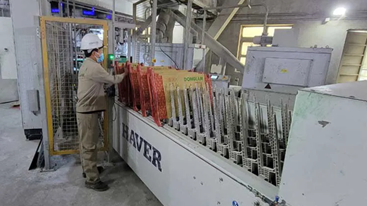
In order to manufacture high quality products which have both domestic and international competitiveness, Catalan JSC has invested in the most modern technological lines and equipment using Robots and automation technologies. In addition, some auxiliary equipment is also imported from countries such as Japan, Britain, America and Belgium. Although the company is growing rapidly and creating a foothold in the market, the actual energy consumption is still high with over VND90 billion per year, including costs for electricity, coal and gas.
-

In the morning of 14 September 2010, at the head office of the Ministry of Industry and Trade (MOIT), the Office of Energy Efficiency, in collaboration with Vietnam Standards and Quality Institute, organized the workshop “Introduction of Energy Efficiency Labeling for electric fans”.
-

At the 25th European Photovoltaic Solar Energy Conference (Valencia, Spain), Imec presents several large-area silicon solar cells with a conversion efficiency above 19%.
-

Watch out everybody, turbines are growing. According to the 2009 Wind Technologies Market Report (WTMR) released this August by the US Department of Energy, a turbine’s average nameplate capacity (the maximum output a turbine can produce), hub height (distance from the ground to the spot where the blades converge), and rotor diameter (diameter of the circle traced by the blades as they rotate) have all increased during the past year.
-

Cooperation on nuclear energy with Russia has a significant meaning, expressing the trust and strategic partnership defined between Vietnam and Russia. This was stated by Prime Minister Nguyen Tan Dung on receiving the General Director of Rosatom State Nuclear Energy Corporation, Sergei V. Kirienko, in Hanoi on September 3.
-

In recent years, Bac Giang has made remarkable progress in all walks of life. In particular, the economy has continuously developed with high growth. The economic structure is changing towards increasing the share of industry and services.
-

Google chính thức tham gia kinh doanh năng lượng sạch. Người khổng lồ trong lĩnh vực tìm kiếm này đã chính thức thông báo một công ty con của hãng – Google Energy đã kí hợp đồng năng lượng có thời hạn 20 năm với công ty NextEra Energy. Google sẽ bắt đầu mua 114 MW điện của “cánh đồng gió Iowa” từ ngày 30/07.


 Contract Award Notice - Providing technical support, training, and communication on energy efficiency for industrial zones and clusters in Vietnam (Package C2.2.13)
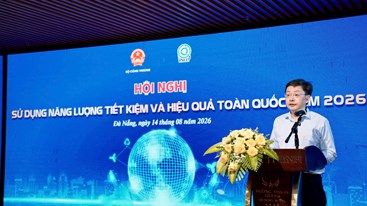 Conference on Energy Efficiency and Conservation in 2026
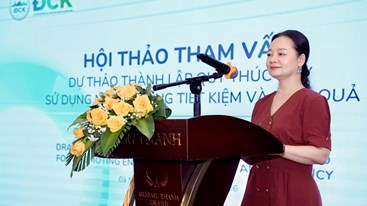 Consultation on the Draft of the Vietnam Energy Efficiency Fund Establishment
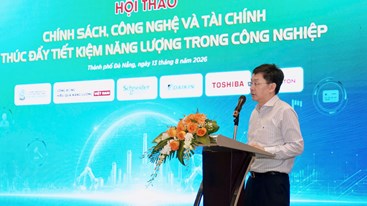 Policies, Technology and Finance Driving Energy Efficiency in the Industrial Sector
 Contract Award Notice - Review and update for current Energy Efficiency Benchmarking for 2 Sub-Industrial sectors
 Contract Award Notice - Notice for Contracts award for Finalize VNEEF (Vietnam National Energy Efficiency Fund) model (Package C2.2.14)
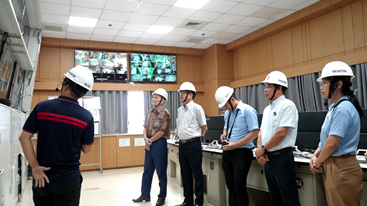 Polytex Pioneers Energy Efficiency in the Textile and Dyeing Industry