-

Massive fit-out works both above and below ground will begin in the next six months as landowners move to upgrade their property portfolios. This will add to the already burgeoning construction on at least five big sites in Sydney's central business district.
-

Ngày 17/9, tại thành phố Đồng Hới (Quảng Bình), Bộ Công thương phối hợp với Ngân hàng Thế giới tổ chức hội nghị giao ban về tình hình triển khai thực hiện dự án Năng lượng nông thôn II (REII) và REII tài trợ bổ sung với các chủ đầu tư dự án tại các tỉnh thuộc khu vực miền Bắc và miền Trung Tây nguyên. Dự án REII và dự án REII tài trợ bổ sung có tổng nguồn vốn hơn 580,1 triệu USD, trong đó vốn vay WB 420 triệu USD.
-

The legendary competition between the branches of the U.S. armed forces has taken on a sustainable twist. Take portable solar power, for example. The Marines just introduced a portable solar power system this spring, and a few weeks later the Air Force kicked in with a portable solar system of its own.
-

Philadelphia subway trains are the next to jump on the energy innovation bandwagon, by using the energy they create from braking to help power other trains and possibly even the electric grid.
-

Almost 800 businesses from 22 countries and territories from around the world will take part in the International Exhibition of Construction, Building Materials, Housing and Interior Décor (Vietbuild) being held in Ho Chi Minh City on September 16-20.
-

Những hợp chất lạ có trong loài cây bụi Euonymus alatus, còn gọi là "cây bụi phát sáng", có thể tạo ra những bước tiến mới trong nhiên liệu sinh học và các loại dầu thực phẩm ít calorie.
-

Sản phẩm pin mặt trời giá rẻ của TS Nguyễn Thế Vinh và TS Nguyễn Thanh Lộc (Đại học Bách khoa TP.HCM) có giá chưa đến 300USD/m2, bằng khoảng 1/4 so với hàng nhập khẩu. Loại pin này dùng vật liệu chính là TiO2 được nhúng vào dung dịch tạo màu với hợp chất hữu cơ chứa kim loại có màu xanh.
-

An MIT team has managed what amounts to artificial photosynthesis, using a modified virus and sunlight to split water into hydrogen and oxygen atoms. The hydrogen can then be stored and used to generate electricity using a fuel cell, or to make liquid fuels for cars and trucks.
-

On 14 September, Petrovietnam Fertilizer and Chemicals Corporation (PVFCCo) inaugurated the construction project of the system recovering CO2 from the exhaust of Phu My Fertilizer Plant. The project aims to increase annual urea fertilizer output of the plant by about 60,000 tons, while reducing 40,000 tons of CO2 emissions per year to protect the environment.
-

Chiếc xe này ra mắt tại triển lãm Eurobike Show 2010, được tổ chức vào tuần trước tại Friedrichshafen Đức. Nắm được thị hiếu hoài cổ của bộ phận các khách hàng vẫn đi thích xe đạp, các nhà sản xuất dự định sẽ cho ra lò 667 chiếc. Mỗi chiếc BlackTrail có giá 75.660 USD.
-

According to Can Tho Energy Conservation Center, after six months of implementing energy efficiency projects and programs, many businesses in the city have had a change in awareness and actively participated in the implementation of energy saving measures. Since the beginning of the year, Can Tho City has saved over 9.5 million kWh of power.
-

In order to manufacture high quality products which have both domestic and international competitiveness, Catalan JSC has invested in the most modern technological lines and equipment using Robots and automation technologies. In addition, some auxiliary equipment is also imported from countries such as Japan, Britain, America and Belgium. Although the company is growing rapidly and creating a foothold in the market, the actual energy consumption is still high with over VND90 billion per year, including costs for electricity, coal and gas.
-

In the morning of 14 September 2010, at the head office of the Ministry of Industry and Trade (MOIT), the Office of Energy Efficiency, in collaboration with Vietnam Standards and Quality Institute, organized the workshop “Introduction of Energy Efficiency Labeling for electric fans”.
-

Nhóm nghiên cứu thuộc Viện Công nghệ Massachussetts đang tiến hành những nghiên cứu với mục đích thực hiện được quá trình quang hợp nhân tạo,sử dụng 1 loại virus hỗ trợ và ánh sáng mặt trời để tách nước thành hiđro và oxi. Hiđro thu được sẽ được sử dụng để phát điện hoặc làm nhiên liệu lỏng cho ô tô và xe tải.
-

Watch out everybody, turbines are growing. According to the 2009 Wind Technologies Market Report (WTMR) released this August by the US Department of Energy, a turbine’s average nameplate capacity (the maximum output a turbine can produce), hub height (distance from the ground to the spot where the blades converge), and rotor diameter (diameter of the circle traced by the blades as they rotate) have all increased during the past year.
-

Cooperation on nuclear energy with Russia has a significant meaning, expressing the trust and strategic partnership defined between Vietnam and Russia. This was stated by Prime Minister Nguyen Tan Dung on receiving the General Director of Rosatom State Nuclear Energy Corporation, Sergei V. Kirienko, in Hanoi on September 3.
-

In recent years, Bac Giang has made remarkable progress in all walks of life. In particular, the economy has continuously developed with high growth. The economic structure is changing towards increasing the share of industry and services.
-

In September 2009, after two years of construction and infrastructure investment, the people of Dai Tan commune, with Dai Loc district government, were pleased to welcome the success of the first biopetrol products of Dai Tan ethanol plant which was invested by Dong Xanh JSC with the total investment capital of more than VND500 billion (the working capital is expected to reach VND900 billion). Dai Tan ethanol plant is considered an "enormous" project which will bring great benefits to the industry of Dai Loc district.
-

On 9th September 2010, the Ministry of Industry and Trade (MOIT) held the Conference on science and technology activities in 2006-2010 period. Deputy Minister Do Huu Hao attended and chaired the meeting.
-

On 8th September, at the head office of the Ministry of Industry and Trade, leaders of the Ministry granted the certificate of energy-saving products which are energy labeled for the group of compact light products of three dominant manufacturers of Vietnam, including Dien Quang Lamp Joint Stock Company, Philips Electronic (Vietnam) Co Ltd and Rang Dong Joint Stock Company.



 REOI - C2.2.11: Support the development of energy management systems and capacity building
28/04/2026
REOI - C2.2.11: Support the development of energy management systems and capacity building
28/04/2026
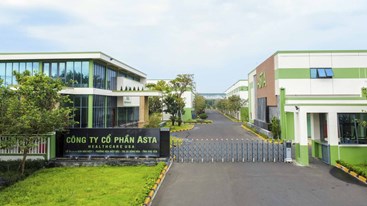 Energy Efficiency Solutions in Pharmaceutical Manufacturing
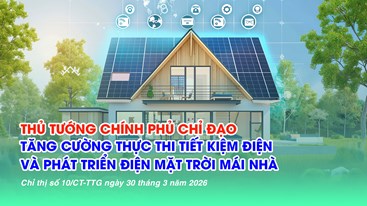 Prime Minister Issues Directive to Strengthen Electricity Saving and Promote Rooftop Solar Power Development
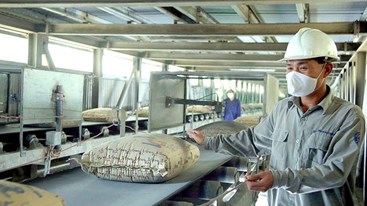 The cement industry applies energy efficiency and conservation, moving toward green and sustainable development
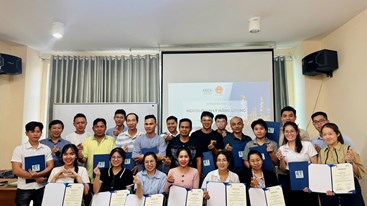 Energy manager training courses in June 2026


.jpg?w=367&h=206&mode=crop)