Monday, 21/09/2026 | 07:30 GMT+7
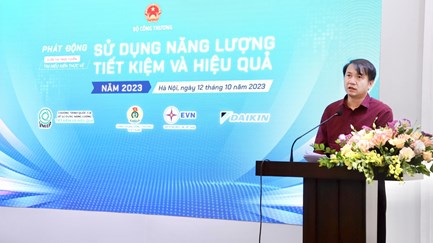
On October 12, 2023, in Hanoi, the Energy Conservation Steering Committee Office (Ministry of Industry and Trade), in collaboration with relevant units, organized the launch ceremony of the online competition 'Study on energy efficiency and conservation in 2023'.
 Polytex Pioneers Energy Efficiency in the Textile and Dyeing Industry
 Contract Award Notice - Review and update for current Energy Efficiency Benchmarking for 2 Sub-Industrial sectors
 Contract Award Notice - Providing technical support, training, and communication on energy efficiency for industrial zones and clusters in Vietnam (Package C2.2.13)
.png?w=110&h=73&mode=crop) ROEI - C2.2.15: Develop a framework for proposing new projects financed by the GCF
ROEI - C2.2.15: Develop a framework for proposing new projects financed by the GCF
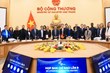 The 9th VEPG Steering Committee Meeting: Strengthening Coordination for Viet Nam’s Just Energy Transition








.jpg)


























.png?w=367&h=206&mode=crop) ROEI - C2.2.15: Develop a framework for proposing new projects financed by the GCF
ROEI - C2.2.15: Develop a framework for proposing new projects financed by the GCF
 Contract Award Notice - Develop tools for analyzing the energy efficiency of sub-projects and assess the current state of the market for energy-saving investment loans (C2.2.12)
 Contract Award Notice - Support the development of energy management systems and capacity building (Package C2.2.11)
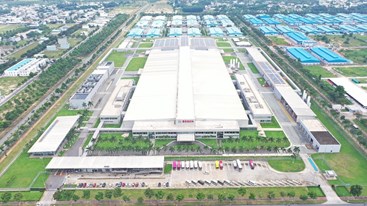 Bosch Vietnam Optimizes Energy to Advance Sustainable Manufacturing
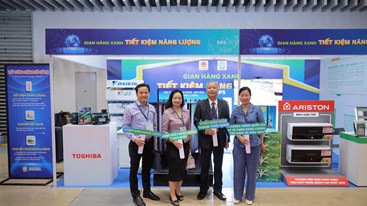 Vietnam ETE & Greenergy Expo 2026: Promoting Green Transition and Energy Efficiency
 Contract Award Notice - Develop/Upgrade MRV Systems for Selected Industrial Sectors – Package C2.1.26