Saturday, 17/10/2026 | 04:35 GMT+7

Ireland’s energy imports cost the country €5.7 billion (£4.2bn) in 2014.
Ireland’s energy imports cost the country €5.7 billion (£4.2bn) in 2014.
That’s according to the Sustainable Energy Authority of Ireland (SEAI) which added it imported 85% of its energy during the same period.
Around 97% of imports were fossil fuels – oil, gas and coal accounted for 56%, 31% and 10% respectively.
Electricity imports and biofuels were 2% and 1%.

Its domestic energy production included 47% of renewable energy sources, 6% of natural gas and 3% of non-renewable waste.
Eimear Cotter, Head of Low Carbon Technologies at SEAI said: “In 2014, 15% of our energy came from indigenous resources with renewable energy now starting to make a significant contribution. However the remaining 85% of our energy requirements came from abroad, costing us more than €15 million (£11.2m) every day. This is a lost opportunity in terms of keeping this money here in Ireland and further developing our abundant renewable resources.
“The transport sector in particular relies almost entirely on imported oil. Options to reduce this dependency include reducing energy demand by being smarter about how we use transport and using clean fuels including bioenergy.”
Edie.net







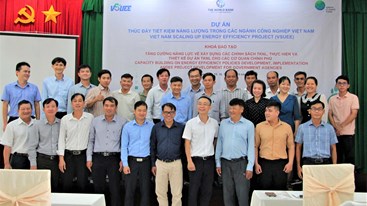


 Polytex Pioneers Energy Efficiency in the Textile and Dyeing Industry
 Conference on Energy Efficiency and Conservation in 2026
 Consultation on the Draft of the Vietnam Energy Efficiency Fund Establishment
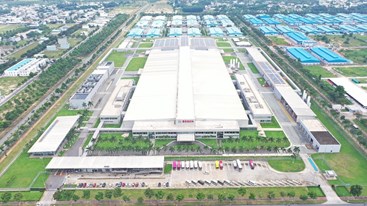 Bosch Vietnam Optimizes Energy to Advance Sustainable Manufacturing
 Contract Award Notice - Support the development of energy management systems and capacity building (Package C2.2.11)
 Contract Award Notice - Review and update for current Energy Efficiency Benchmarking for 2 Sub-Industrial sectors
 Contract Award Notice - Notice for Contracts award for Finalize VNEEF (Vietnam National Energy Efficiency Fund) model (Package C2.2.14)